Customer story · Repair services for insurers
An insurer sends a claim, a technician has to go to the customer's home, and someone has to close it with a report. We built the platform that handles everything in between, so the only person in the loop is the technician.
· 3 min read
- Industry
- Repair services for insurers · home
- Location
- Spain, nationwide
- Scope
- Operations panelTechnician appWhatsApp and voice agentsWorkflowsPortal robotsTechnician payouts
- Benefits
- Every claim shows its deadlines, with a warning before one is missed
- Customers get their appointment and any change on WhatsApp, without calling the office
- The technician closes the visit on their phone and the report goes straight to the insurer's system
- Technician payouts come from closed jobs, with no spreadsheets
Claims closed with no action from the office
Time to first contact with the customer
Claims within deadline (SLA)
The only person in the loop is the one holding the screwdriver.
Context
When an insured customer's washing machine breaks, the insurer (or an assistance company working for it) opens a claim and hands it to a network of technicians. From there, someone has to call the customer, find a technician for that area and trade, agree a time and get the part. Then they quote if needed and write the report. At the end of the fortnight, they pay the technician and invoice the client.
The company does that work for home appliances, electronics, computers and heating and cooling. A technician does the repair. The system does everything else.
The problem, from start to finish
We followed a real claim from the moment it arrived until it was paid, and something broke at every step:
- Intake
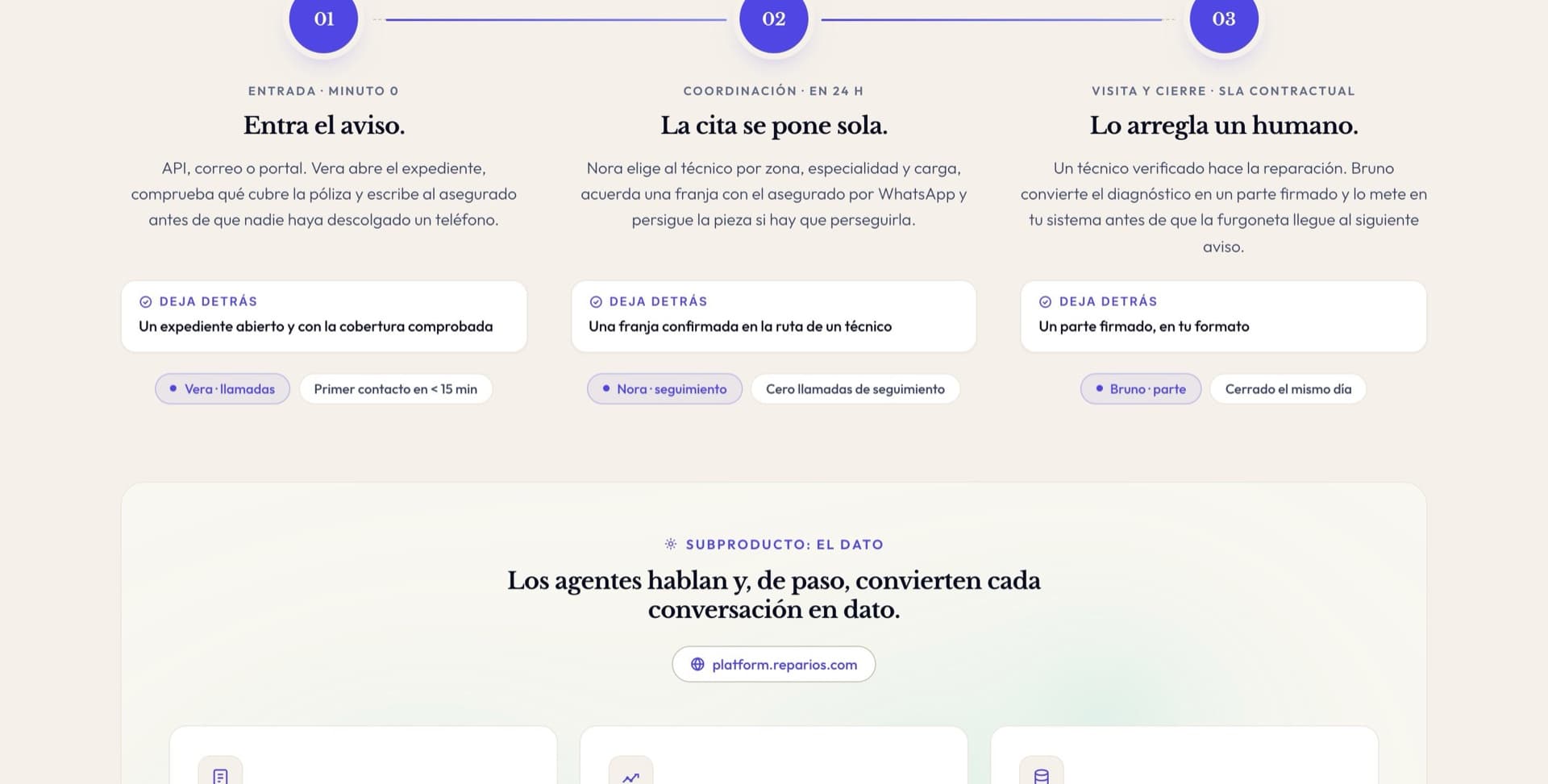
- Claims arrived by API, by email or inside each company's portal, each in its own format. Someone had to copy them by hand.
- First contact
- Contracts set deadlines: contact within 3 hours and book within 24. Nobody could see which claims were about to miss them.
- Coordination
- Everything happened by phone, so the information stayed in the call. Customers rang to ask "any news on my repair?".
- Visit
- Technicians wrote their reports at night in free text, and someone in the office retyped them into each insurer's format.
- Repair
- If a quote or a part was needed, the claim stalled and nobody chased it.
- Payment
- At the end of each fortnight, technician payouts and client invoices were reconciled in spreadsheets.
The hard parts
Some companies have no API, only a web portal. For those we built robots that open the portal and do the task, such as booking the first visit for a claim. The robots also flag when credentials are missing or something fails.
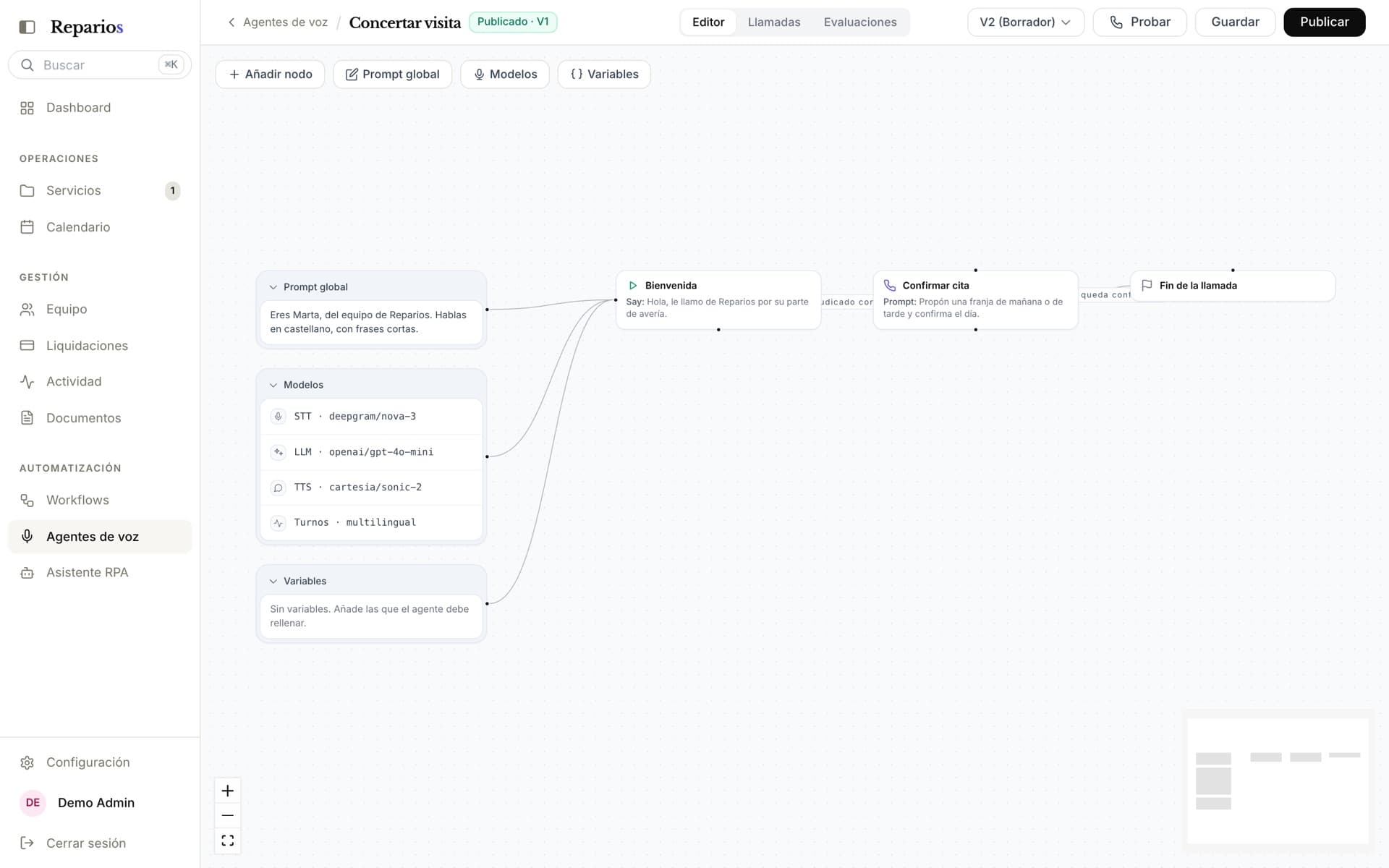
The voice agent can't make anything up. It answers with what's in the database (the appointment, the part, the status), and every call is saved as data, not as a note nobody reads.
Technicians don't work at a desk. The app had to be mobile and simple. It also needed a practice job to learn on: book the visit, diagnose, attach a photo and signature, and send the report.
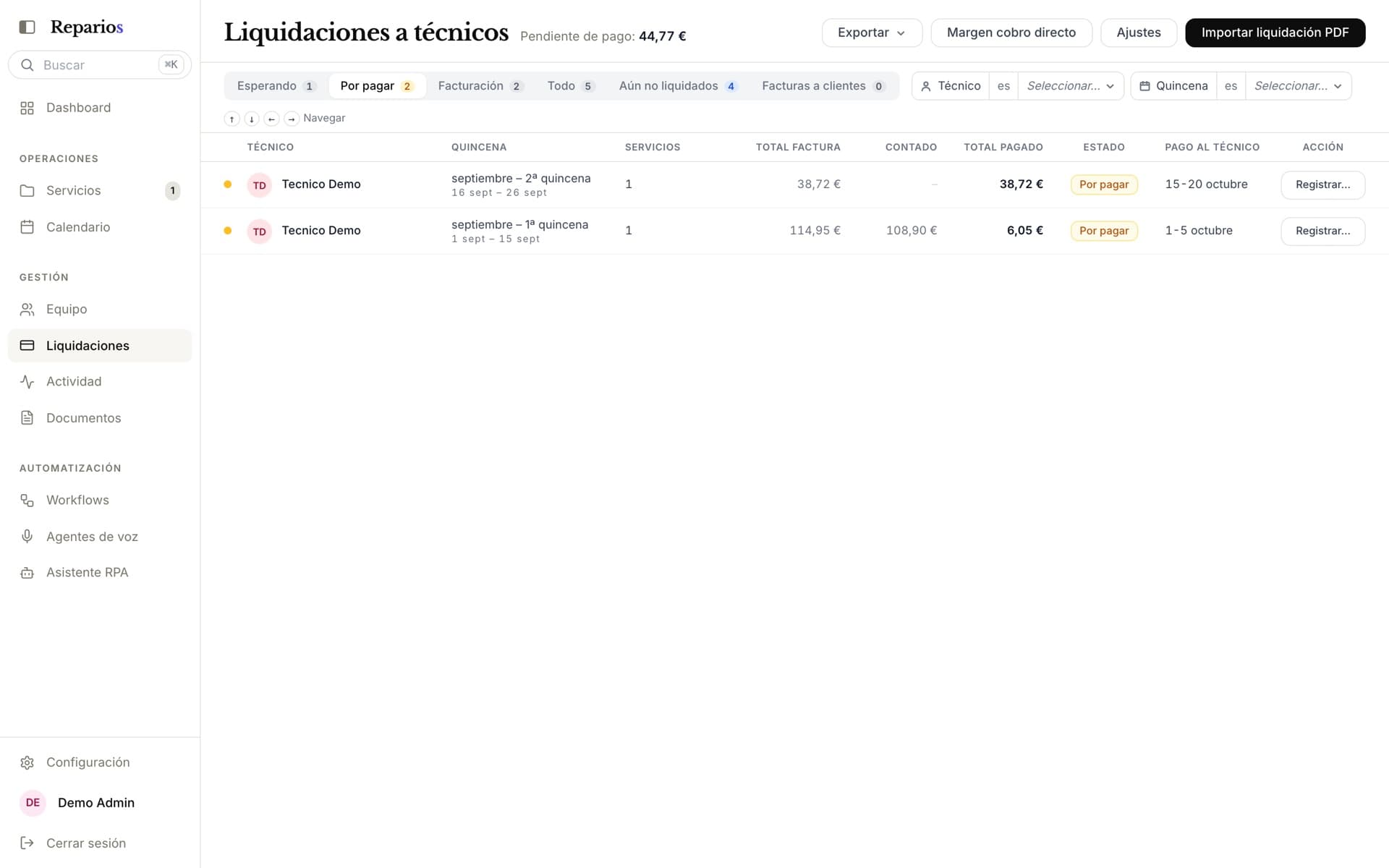
And the money had to add up: client rates, technician pay, cash collected on site and fortnightly cycles, with a profit and loss view per intermediary.
The solution
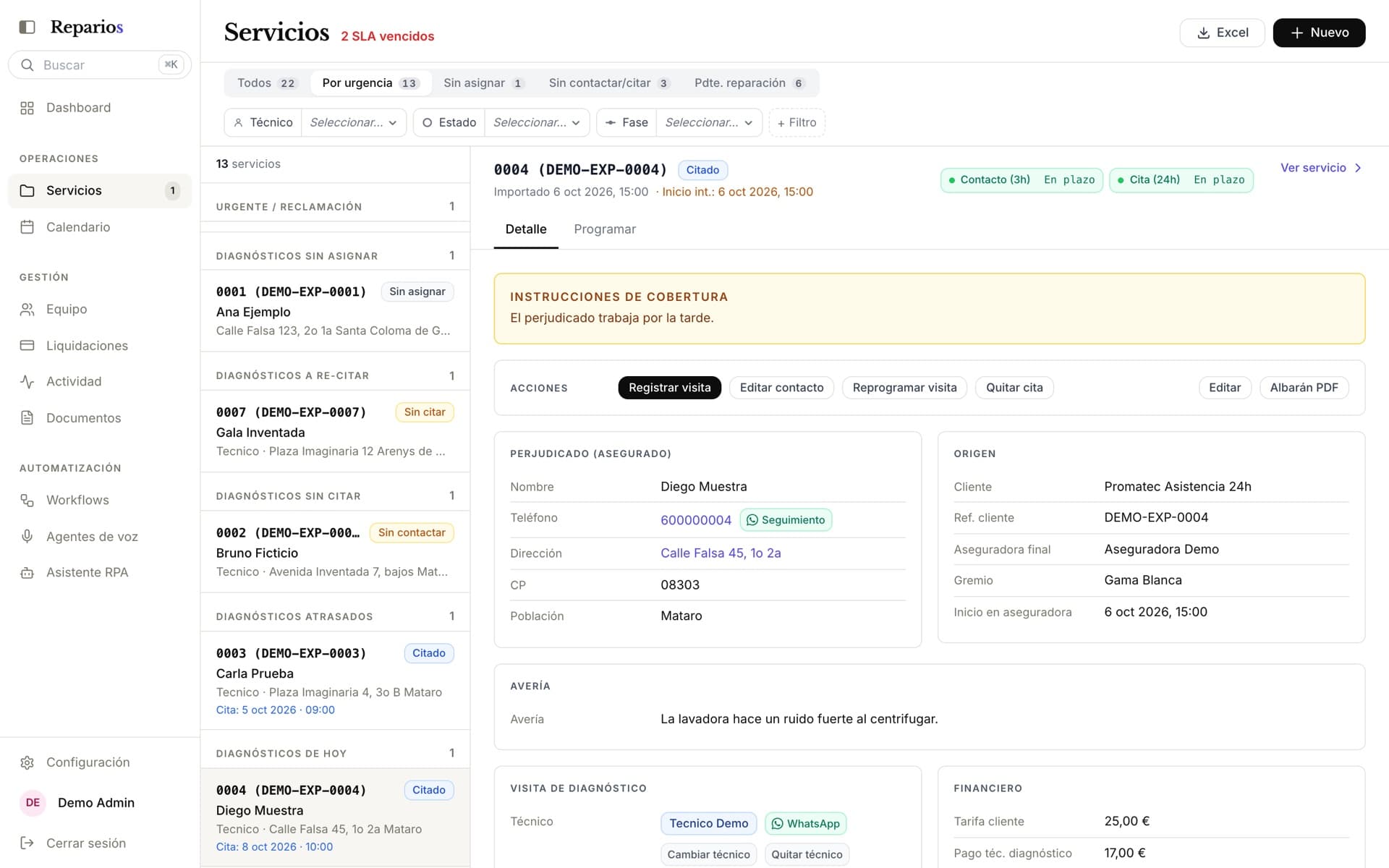
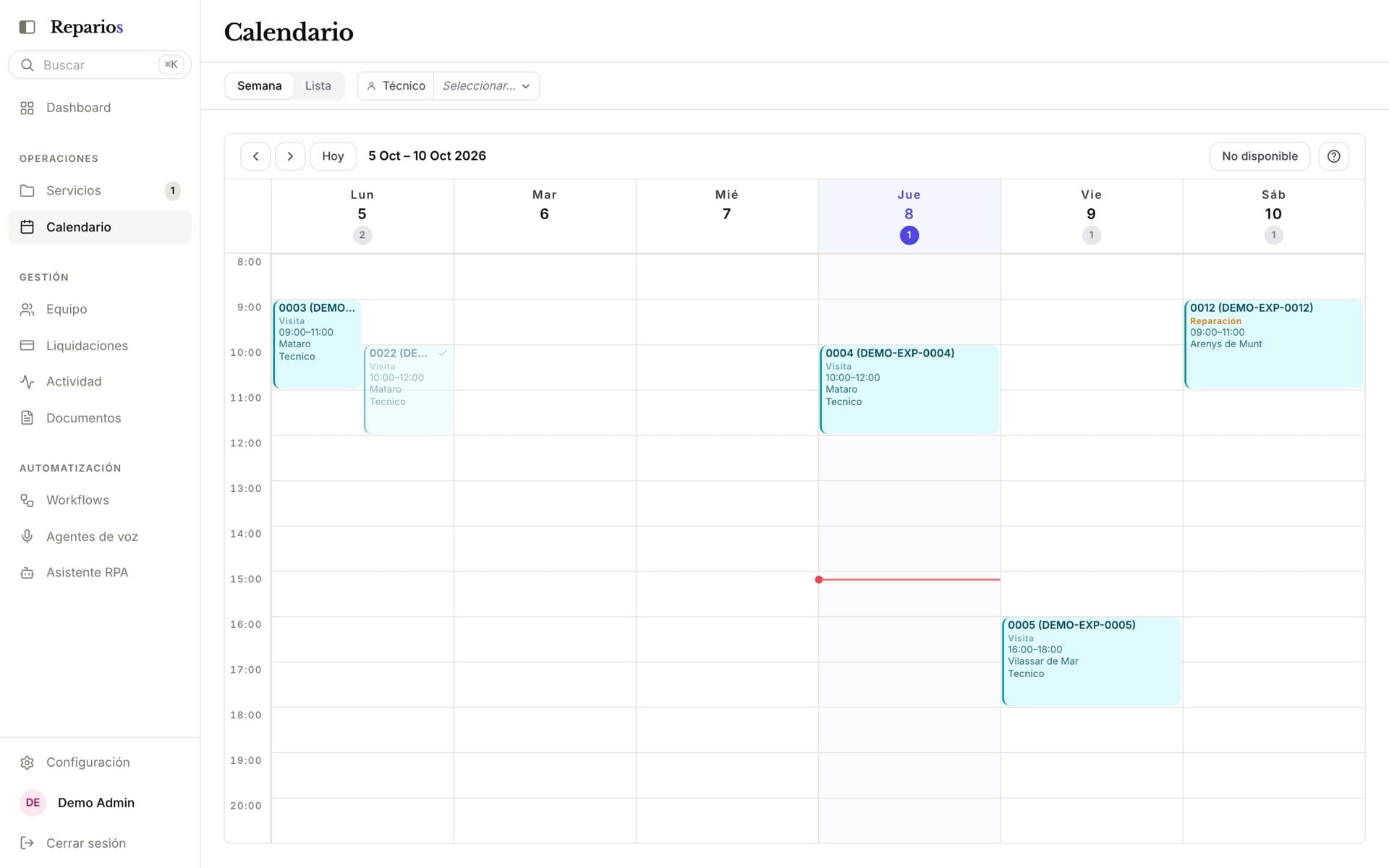
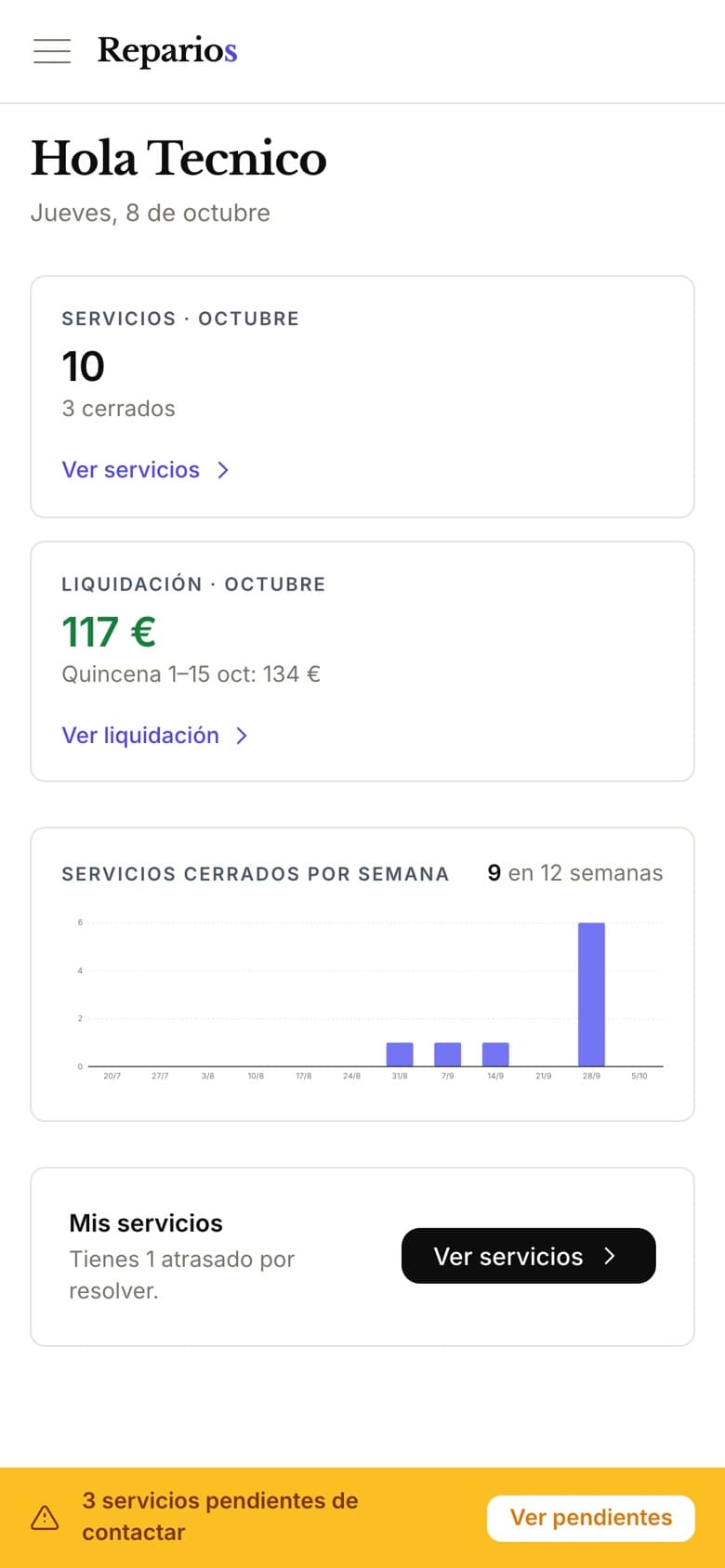
One platform with two sides. The office has a panel with jobs sorted by urgency, the calendar, the team, payouts, activity and documents. The technician has an app with their jobs, their calendar and what they'll be paid.
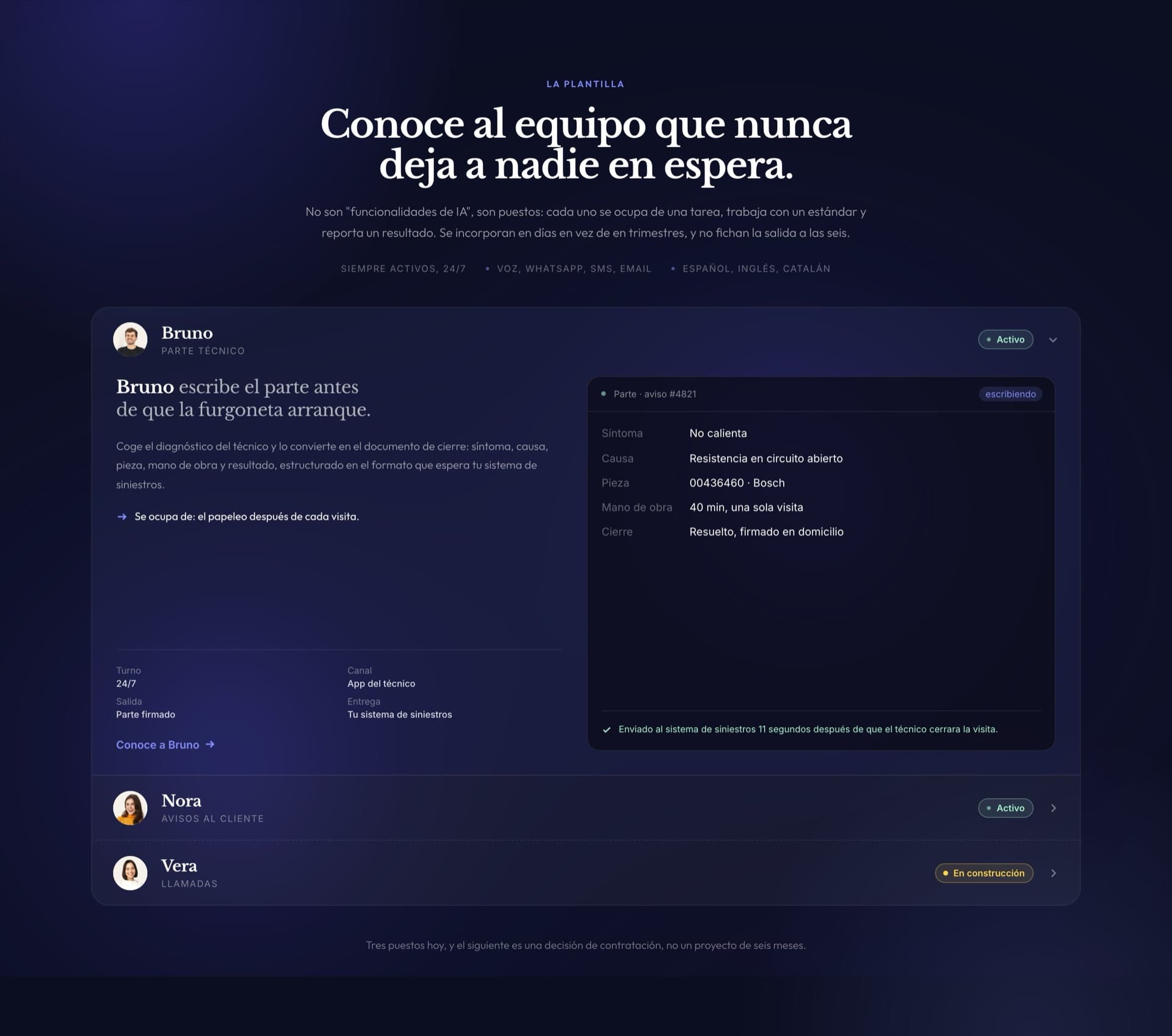
A team of agents works on top of it, each with one job. Bruno turns the technician's diagnosis into a signed report in each insurer's format. Nora messages the customer on WhatsApp to confirm or move the appointment. Vera answers the phone (in progress).
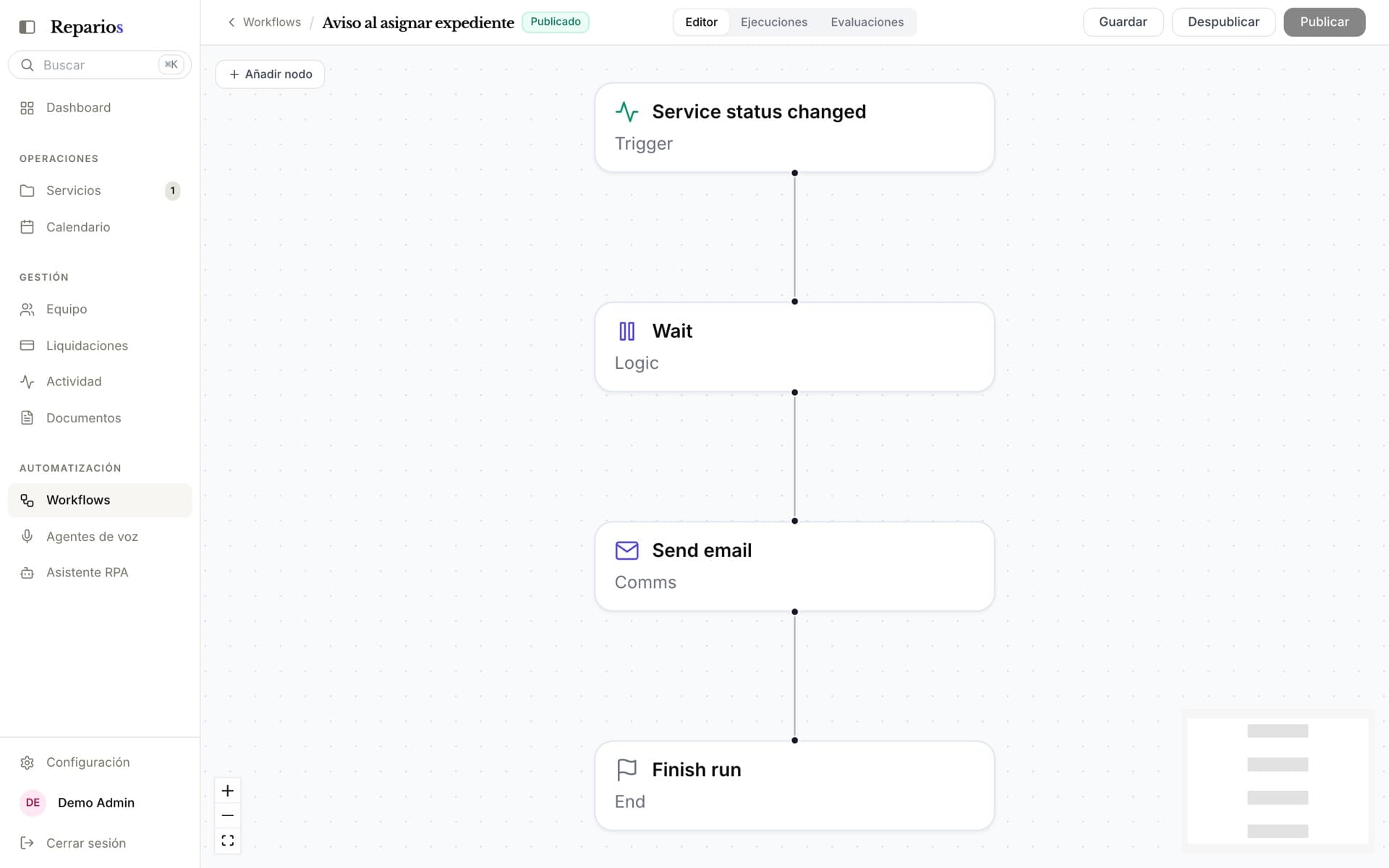
The office can build its own automations in a visual editor, and design voice agents step by step. Every run is logged: how many fail, how long they take and how much time they save.
It plugs into the claims system each company already uses. Nothing has to be replaced to get started.
Results
Today the office opens the claim and the platform takes it all the way to a documented close. Deadlines are visible and the customer always knows when the technician is coming. Every visit leaves the same structured record: symptom, cause, part, labour and outcome.
It started with the home, but the cycle is the same anywhere someone has to visit in person: meters and installations, roadside assistance or last-mile delivery.
Try it
The demo is the real platform with sample data. You can sign in as the office or as a technician, move claims, book visits, and start again with "Reiniciar datos" (reset data). Nothing is saved.
Next step
Does your team coordinate by phone what could run on its own? Let's talk about automating it.